Introduction
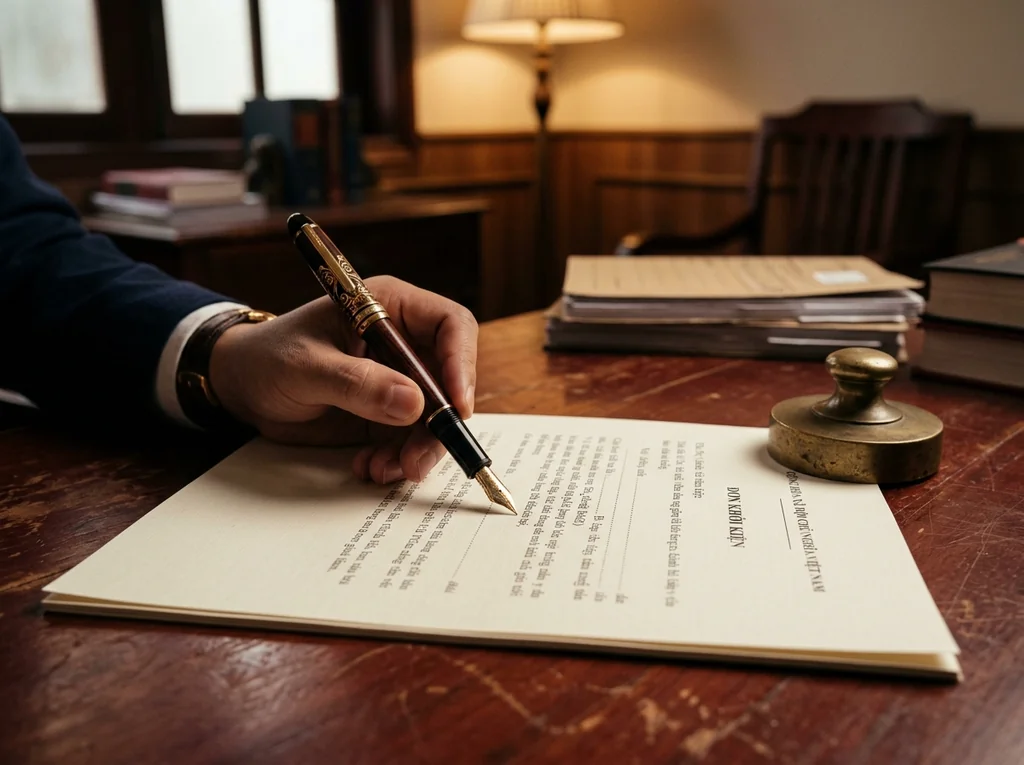
The lawsuit petition is the first and most important legal document in civil litigation. A properly drafted petition not only ensures court acceptance but also shapes the entire litigation strategy of the case. This article provides a detailed analysis of petition drafting techniques under the Civil Procedure Code 2015, along with practical insights from legal practice.
1. Legal Basis for Lawsuit Petitions
1.1. Article 189 of the CPC 2015
Article 189 of the CPC 2015 specifically prescribes the form and content of lawsuit petitions:
- The petition must be in written form
- Must clearly state the court requested to adjudicate
- Must provide complete information about the plaintiff and defendant
- Must clearly present claims and legal basis
1.2. Standard Petition Template
Resolution 01/2017/NQ-HDTP issued a unified lawsuit petition template. However, the template provides only a basic framework; practitioners must adapt and supplement it for each specific case.
1.3. Grounds for Petition Return
Under Article 192 of the CPC 2015, courts return petitions when:
- The petitioner lacks standing or procedural capacity
- Filing conditions are unmet (e.g., no prior grassroots mediation for land disputes)
- The limitation period has expired
- The matter falls outside court jurisdiction
- A legally effective judgment/decision already exists for the same matter
2. Standard Petition Structure
2.1. Header
National title and motto: Written correctly per regulations: ` SOCIALIST REPUBLIC OF VIETNAM Independence – Freedom – Happiness `
Document title: LAWSUIT PETITION
Addressed to: State the exact name of the competent court, including court level and locality. Example: "People's Court of Cau Giay District, Hanoi City."
2.2. Party Information Section
Plaintiff (individual):
- Full name
- Year of birth
- ID card number, date and place of issuance
- Residential address (registered or permanent)
- Contact phone number, email
Plaintiff (legal entity):
- Full name per business license
- Enterprise identification number
- Headquarters address
- Legal representative (name, position)
Defendant: Same information as plaintiff. Note: the defendant's address must be accurately determined as it affects territorial jurisdiction and service of process.
Persons with Related Rights and Obligations: Provide complete information if applicable.
2.3. Claims Section
This is the most critical section, structured as follows:
a) Statement of Legal Facts:
- State the legal relationship (e.g., sale contract No. X dated Y)
- Describe the performance of obligations
- Identify specific breaching conduct
- State consequences and damages incurred
b) Legal Basis:
- Cite specific applicable legal provisions
- Explain the connection between facts and legal norms
- Reference relevant precedents if applicable
c) Specific Claims:
- List each specific, clear claim
- State exact monetary amounts (if applicable)
- State interest calculation method and period (if applicable)
2.4. Attached Documents Section
List comprehensively and number all documents and evidence accompanying the petition.
2.5. Footer
- Place, date
- Signature of the petitioner (or legal representative)
- Full name
3. Content Writing Techniques
3.1. The IRAC Method
Apply the IRAC method (Issue - Rule - Application - Conclusion) when presenting content:
- Issue: Clearly identify the dispute to be resolved
- Rule: Cite applicable legal norms
- Application: Apply norms to specific facts
- Conclusion: State specific claims
3.2. Fact Presentation Techniques
- Chronological Order: Begin from when the legal relationship arose, describing events in temporal sequence.
- Precise Legal Language: Avoid emotional or biased language. For example: write "the defendant failed to perform payment obligations" instead of "the defendant deliberately evaded payment."
- Quantify with Data: Clearly state dates, amounts, and specific quantities.
- One Idea Per Paragraph: Avoid cramming multiple events into a single long paragraph.
3.3. Legal Citation Techniques
- Cite exact article, paragraph, and point numbers of legal instruments
- Write complete document names: "Article 418, Paragraph 1 of the Civil Code 2015"
- Quote statutory provisions when necessary
- Apply the principle that specialized law takes precedence over general law
3.4. Claim Construction Techniques
- Claims must be specific and measurable: "Order the defendant to pay 500,000,000 VND" rather than "order the defendant to pay the contractual amount."
- Claims must have legal basis: Each claim must reference specific legal provisions.
- Separate claims: Principal debt, interest, penalties, and damages should be listed separately.
- Consider cost claims: Request the losing party to bear court fees and attorney's fees (where supported).
4. Common Errors to Avoid
4.1. Formal Errors
- Incorrect court name
- Incomplete or inaccurate party information
- Missing signature or signature by unauthorized person
- Failure to attach documentary evidence
4.2. Content Errors
- Lengthy, unfocused presentation
- Emotional, non-objective language
- Inaccurate or expired legal citations
- Contradictory or unsupported claims
- Inaccurate calculation of claimed amounts
4.3. Strategic Errors
- Too many unnecessary claims
- No alternative claims prepared
- Revealing too much litigation strategy in the petition
- Failing to anticipate opposing party's response
5. Advanced Techniques
5.1. Petitions in Complex Disputes
For multi-party disputes or multiple legal relationships:
- Use subheadings to divide issues
- Present claims separately for each defendant
- Clearly define joint versus several liability
5.2. Petitions with Emergency Interim Measures
When emergency interim measures under Article 111 of the CPC 2015 are needed:
- Clearly state the reasons for emergency measures
- Specify the requested measure (Article 114, CPC 2015)
- Provide evidence of the emergency situation
- Commit to compensation for damages if the request proves unfounded (Article 113, CPC 2015)
5.3. Petitions with Foreign Elements
For disputes with foreign elements under Part Nine of the CPC 2015:
- Determine exclusive jurisdiction under Article 470 of the CPC 2015
- Determine applicable law under Part Five of the Civil Code 2015
- Consider international judicial assistance for service of process
- Prepare certified translations of foreign-language documents
6. Petition Quality Control
6.1. Review Checklist
Before filing, practitioners should verify:
- Court jurisdiction is correct
- Party information is complete and accurate
- Legal facts are presented clearly and logically
- Legal citations are accurate and current
- Claims are specific and supported
- Documentary evidence is complete
- Correct number of copies
- Valid signature
6.2. Peer Review
Another lawyer in the firm should review the petition before filing to identify omissions and objectively evaluate argument quality.
7. Conclusion
Drafting lawsuit petitions is a core skill for litigation practitioners. A high-quality petition must satisfy both formal legal requirements and strategic litigation objectives. Practitioners must hone their case analysis abilities, accurate legal citation, and logical, persuasive presentation.
Investing time and effort in the petition drafting stage yields significant benefits throughout the litigation process, from prompt court acceptance to establishing the foundation for trial advocacy.